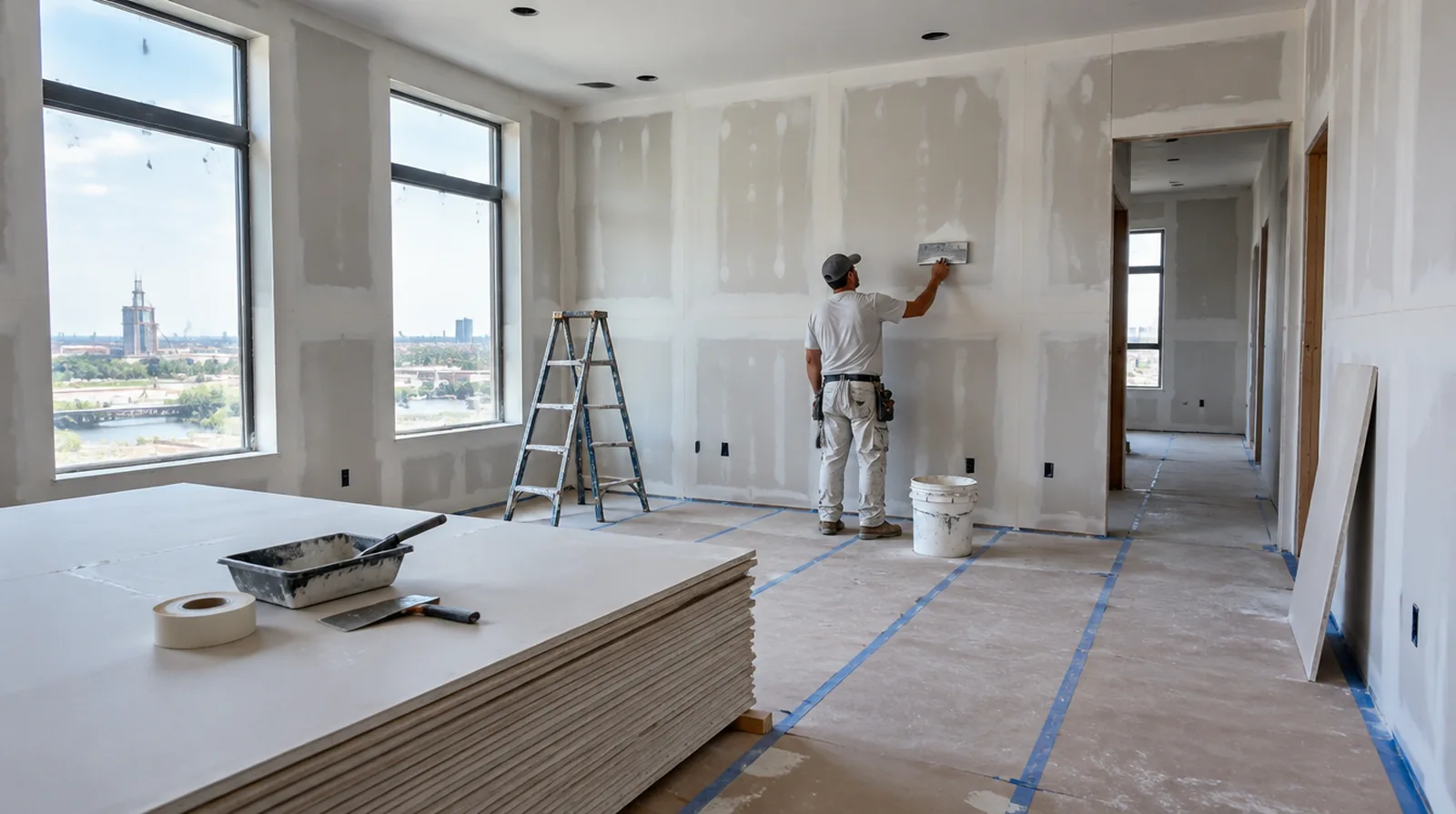
Inspect the whole wall
Review corners, returns and service openings as well as the straight seams in the main wall. Check the finished plane under the planned lighting and from a side angle where possible. Where flooring is staying in place, agree on protective coverings and check that tools and material handling will not damage the visible finish.
Keep external corners straight
A corner profile only produces a straight visible line when it is fitted and coated correctly. Resolve distortion or damage to the bead before successive coats make correction more challenging. If the finish paint is already chosen, share its sheen and color early because those choices influence how surface preparation is judged.
Assess the hung board
Misaligned panels or unsupported joints need attention before the finishing layers can perform properly. Fastener depth and board alignment ought to be checked before joint treatment begins. If there is a fixed move in date, reserve adequate time for the coating stages after drywall work rather than counting only the installation period.
Build the seam gradually
Make later joint coats progressively broader so the transition becomes less abrupt. Butt joints typically need a broader blend because they lack the recessed edges of factory seams. At a surface receiving strong window light, review a dried trial from the side in addition to the normal straight view of the wall.
Consider a skim layer
Broad grazing light can reveal a difference in texture between the paper face and finished joints. A suitable skim treatment may help create a more uniform surface when the specification calls for it. If the completion date matters most, allow for intervals between coats as well as active labor rather than assuming the entire process happens continuously.
Embed the tape
Tape needs a properly bonded bedding coat underneath its full length. Inside corners need a crisp fold and balanced coverage on both faces. Where the quoted work stops before painting, request an explicit description of what remains so the next decorating stage can be priced realistically.
Use controlled sanding
Sanding should refine small tool marks rather than grind away a badly shaped joint. Dust extraction and protection matter even for a room with only a few seams. Where a neat final edge matters, agree whether the finish ends against existing trim or whether that trim will be removed and replaced.
Cover fastener heads
Fill fastener depressions level with the surrounding face without creating avoidable mounds. Adjust any projecting or paper breaking screw before applying material over the location. If the coating stability is unclear, assess which layers are adequately bonded and which ought to be removed instead of simply hidden beneath new material.
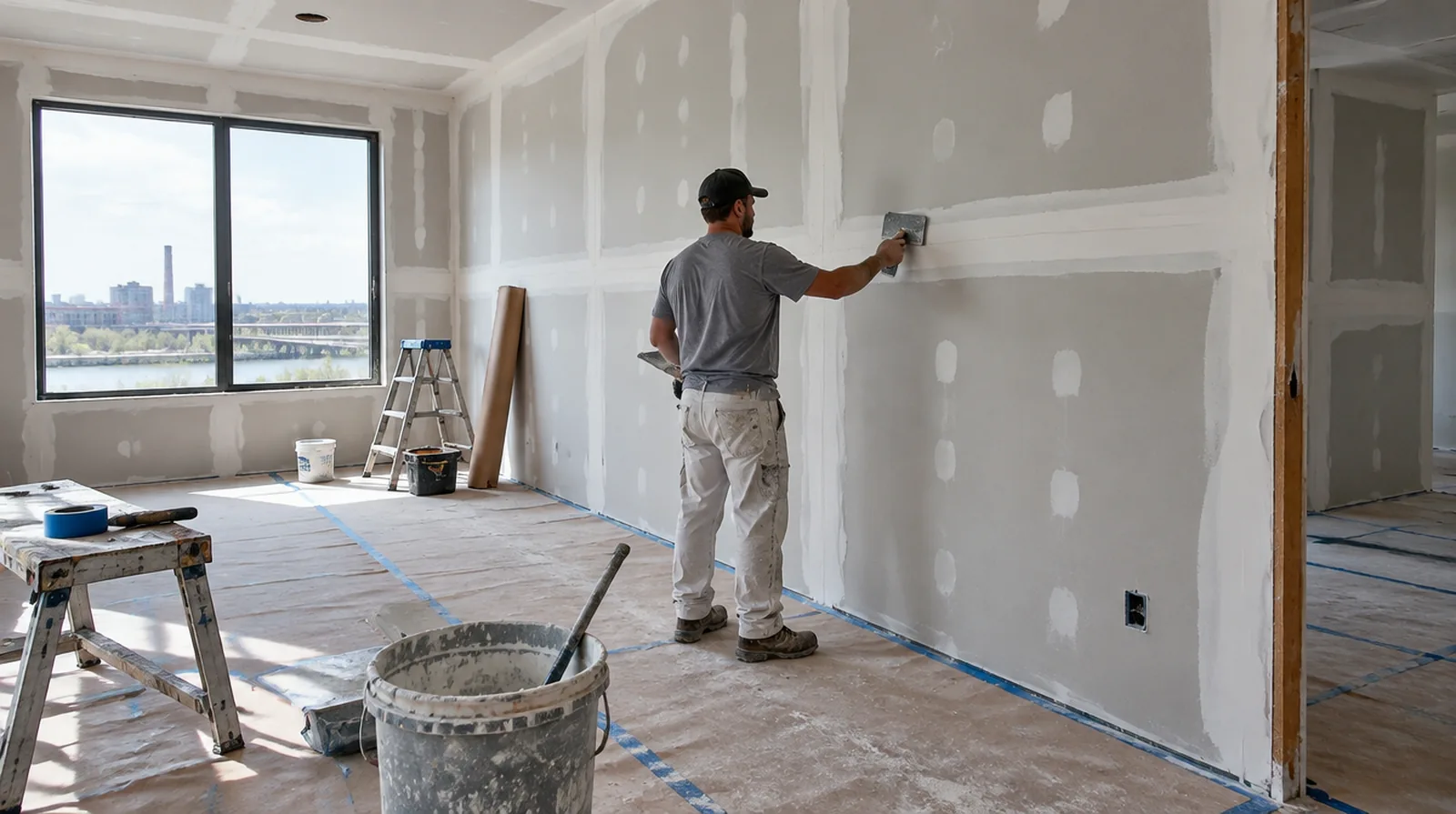
Choose joint materials
Bedding coats and final coats serve different purposes and may use distinct compatible compounds. Selection should reflect joint type, indoor conditions and the manufacturer guidance instead of convenience alone. When the wall has strong reflected light, look at the full plane rather than judging only the narrow strip immediately beside the patch.
Allow genuine drying time
A firm outer skin does not always mean the material beneath it is ready for sanding. Temperature, air movement and room humidity affect the interval between finishing stages. Where several contractors share the renovation, identify the inspection and handover milestones that determine when each following stage can proceed.
Project context in Joliet
Stair access can influence the practical sheet dimensions, while a long ceiling line may make shallow unevenness particularly visible. A Joliet renovation schedule should account for both material handling and the conditions maintained inside the room.
Scope questions before finishing
If a household member is sensitive to dust, discuss containment and cleaning expectations before choosing how to stage the room work.
Where flooring is staying in place, agree on protective coverings and check that tools and material handling will not damage the visible finish.
For a surface that will receive wall covering, share the product requirements early so the finishing stage supports the planned decorative treatment.
Where several contractors share the renovation, identify the inspection and handover milestones that determine when each following stage can proceed.
In a room with little free floor space, identify temporary storage for belongings and establish sufficient clearance for the work before delivery.
If there is a fixed move in date, reserve sufficient time for the coating stages after drywall work instead of counting only the installation period.
Where a surface has been painted many times, consider whether differences in texture or sheen will require a wider decorative treatment.
At a ceiling or wall containing fittings, assign removal and reinstatement duties for the affected devices before repair access is needed.
Where the quoted work stops before painting, request a well defined description of what remains so the next decorating stage can be priced realistically.
For walls beside bright windows, review a dry sample from an oblique angle as well as looking straight at the repaired surface.
When a quote includes multiple visits, ask what happens during each stage and when the interior needs to remain undisturbed between coats.
For a project with several trades, agree which inspection or handover point must happen before the next person starts work.
Explore the Joliet drywall overview for related options, or read the project planning information before arranging the next stage.
More planning details for Joliet
Measure the route and the finished area separately instead of assuming one measurement answers both questions. During cold winter periods, confirm that suitable indoor conditions can be maintained through the finishing stages, not only during the first visit. If neighboring rooms remain in use, explain how dust protection will be managed and when the work zone needs to stay undisturbed.