Feather beyond the opening
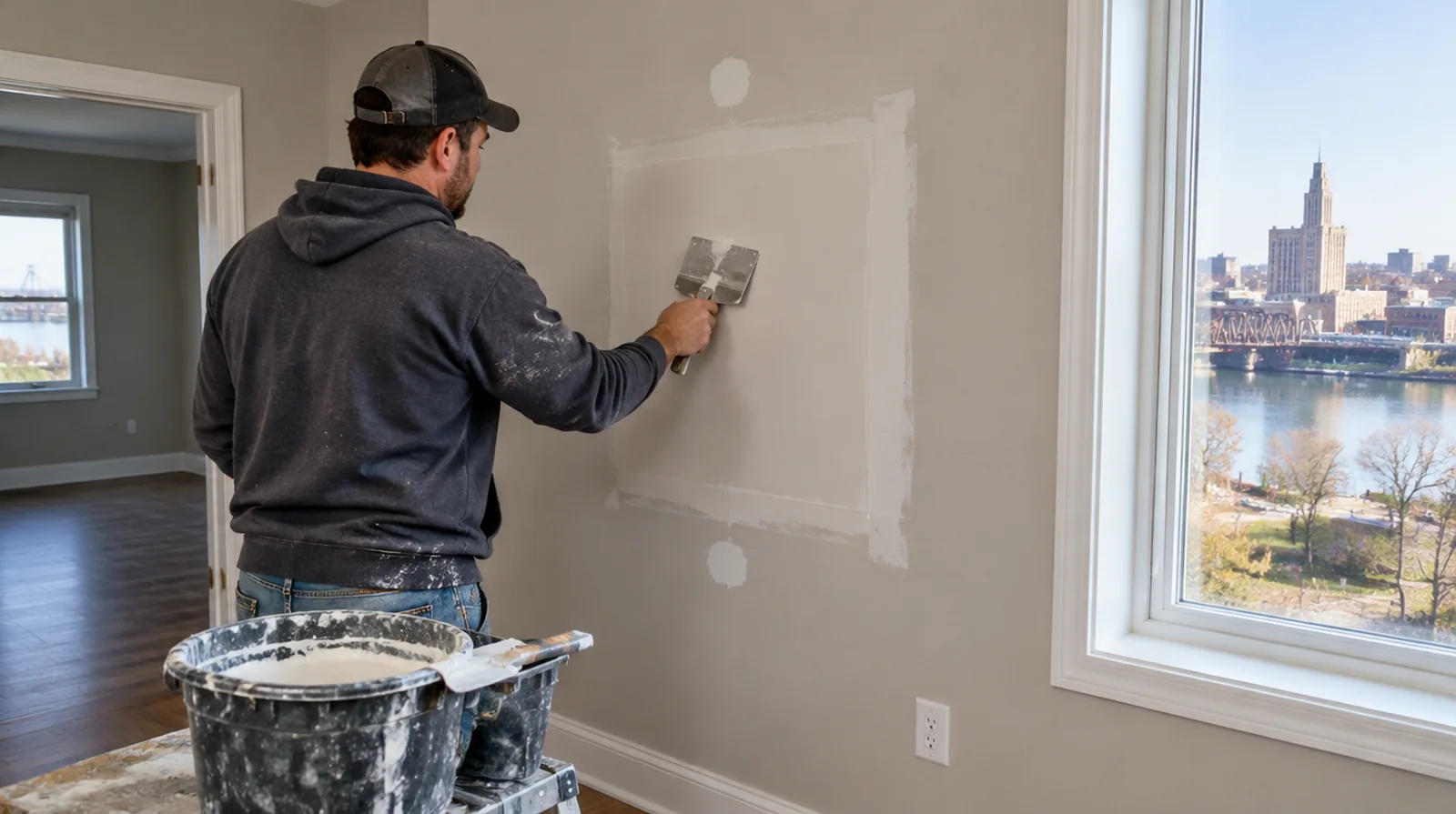
The visible finishing area typically extends farther than the hole because a gradual taper hides the repair edge. The gradual transition is notably important where a window lights the surface from the side. Where a future fixture will be installed, coordinate any required backing while the cavity is accessible rather than reopening the completed wall.
Identify the cause
A dent from moving furniture calls for a differing repair than a joint that repeatedly opens beside a door. Describe any change in the defect and check whether the surrounding board is still stable. If the problem developed after another renovation, explain which nearby materials or building systems changed before the damage became visible.
Review with side lighting
Use an angled view as well as a direct view when reviewing a finished patch. Window light may reveal a contour that ordinary room lighting hides, while paint sheen creates a distinct issue. Where a neat final edge matters, agree whether the finish ends against existing trim or whether that trim will be removed and replaced.
Handle small fastener marks
A visible screw or nail bump can indicate movement between the board and its supporting framing. Adding suitable fastening nearby may be necessary before the damaged spot receives finishing compound. At a surface receiving strong window light, review a dried trial from the side in addition to the normal straight view of the wall.
Set the paint boundary
An old paint coating may not accept an inconspicuous local touch up even after a flat repair. Repainting the full wall from corner to corner may give a more consistent appearance. At an edge beside built in furniture, state whether the obstruction will be removed or whether finishing stops at the section that can be reached.
Choose the patch boundary
The repair must reach gypsum and paper that remain intact, instead of stopping at the visible outline of the hole. A tidy rectangular cut often provides stronger backing than following an irregular broken edge. When the wall has strong reflected light, look at the full plane instead of judging only the narrow strip immediately beside the patch.
Support the replacement
Larger openings need a fitted board patch secured to framing or suitable backing instead of a thick mound of compound. The replacement board thickness should match the original face so the joint can finish level. When more damage could be hidden, ask how any added scope will be documented before extra material is removed or replaced.
Document recurring movement
Cracks that return after cosmetic repairs deserve a conversation about movement or moisture rather than another quick cover. A drywall estimate should state when another trade needs to investigate before surface work proceeds. If the decorative coating is already chosen, share its sheen and color early because those choices influence how preparation of the surface is judged.
Reinforce panel seams
Joint tape bridges the transition between the original wall and a replacement section. Embed the chosen tape fully in its intended compound so the edges bond without bubbles. For a surface that will receive wall covering, share the product requirements early so the finishing stage supports the planned decorative treatment.
Prepare for primer
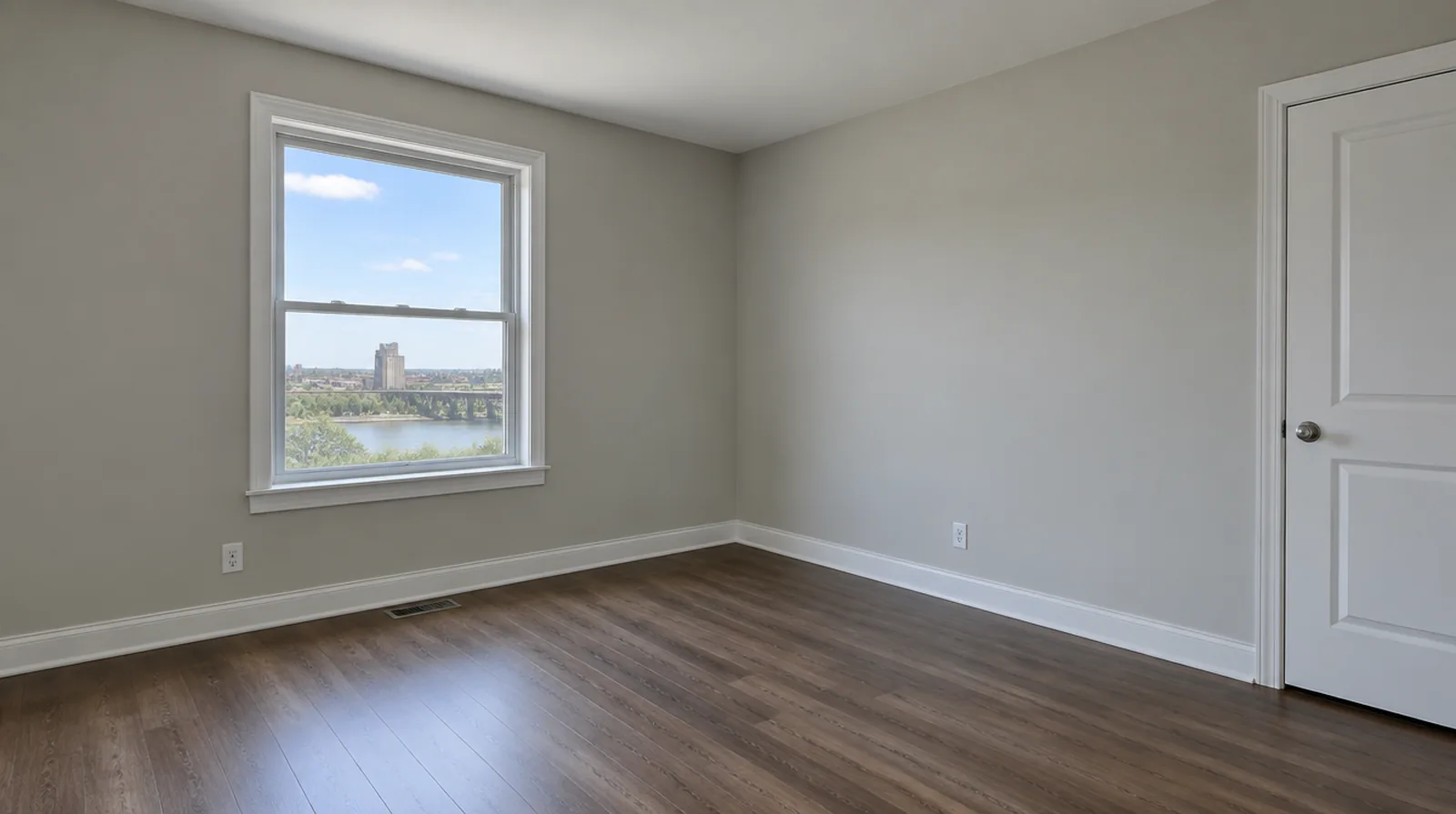
Fresh compound and existing painted drywall absorb coatings differently unless the repair receives suitable primer. Establish whether the quote includes priming or ends with a sanded surface ready for the painter. When more damage could be hidden, ask how any added scope will be documented before extra material is removed or replaced.
Project context in Joliet
Finish the planning discussion by identifying the point where drywall work ends and the primer, trim and decorative coatings begin. A Joliet renovation schedule should account for both material handling and the conditions maintained inside the room.
Scope questions before finishing
For a wall receiving a decorative covering, provide its preparation requirements early sufficient for the drywall finish to support that product.
If the surface condition is uncertain, allow for an assessment that can distinguish stable material from layers that ought not to be covered.
Where the wall meets fixed furniture, clarify whether removal is included or whether the finish will terminate at the accessible edge.
When the decorative coating has been selected, tell the finisher its intended sheen and color while the substrate preparation standard is still being agreed.
When a wall has repeated defects, keep a record of earlier repair attempts so a new assessment does not simply repeat an unsuccessful approach.
Where existing floors will remain, specify protective measures and review the path used by panels, equipment and finishing tools.
Where flooring is staying in place, agree on protective coverings and check that tools and material handling will not damage the noticeable finish.
Where the quoted work stops before painting, request an explicit description of what remains so the next decorating stage can be priced realistically.
At a ceiling or wall containing fittings, assign removal and reinstatement duties for the affected devices before repair access is needed.
For an initial assessment from pictures, provide an overall room photograph and a detailed view of the defect so both context and scale are apparent.
Where a neat final edge matters, agree whether the finish ends against existing trim or whether that trim will be removed and replaced.
At an edge beside built in furniture, state whether the obstruction will be removed or whether finishing stops at the section that can be reached.
Explore the Joliet drywall overview for related options, or read the project planning information before arranging the next stage.
More planning details for Joliet
Stair access can influence the practical sheet dimensions, while a long ceiling line may make shallow unevenness particularly visible. Measure the route and the finished area separately instead of assuming one measurement answers both questions. During cold winter periods, confirm that suitable indoor conditions can be maintained through the finishing stages, not only during the first visit.